
Six Ways That Gestalt Therapy Is Secretly A Spiritual Practice
Born from a cultural paradigm of sex, drugs and rock'n'roll - to a world-recognised form of therapeutic treatment.

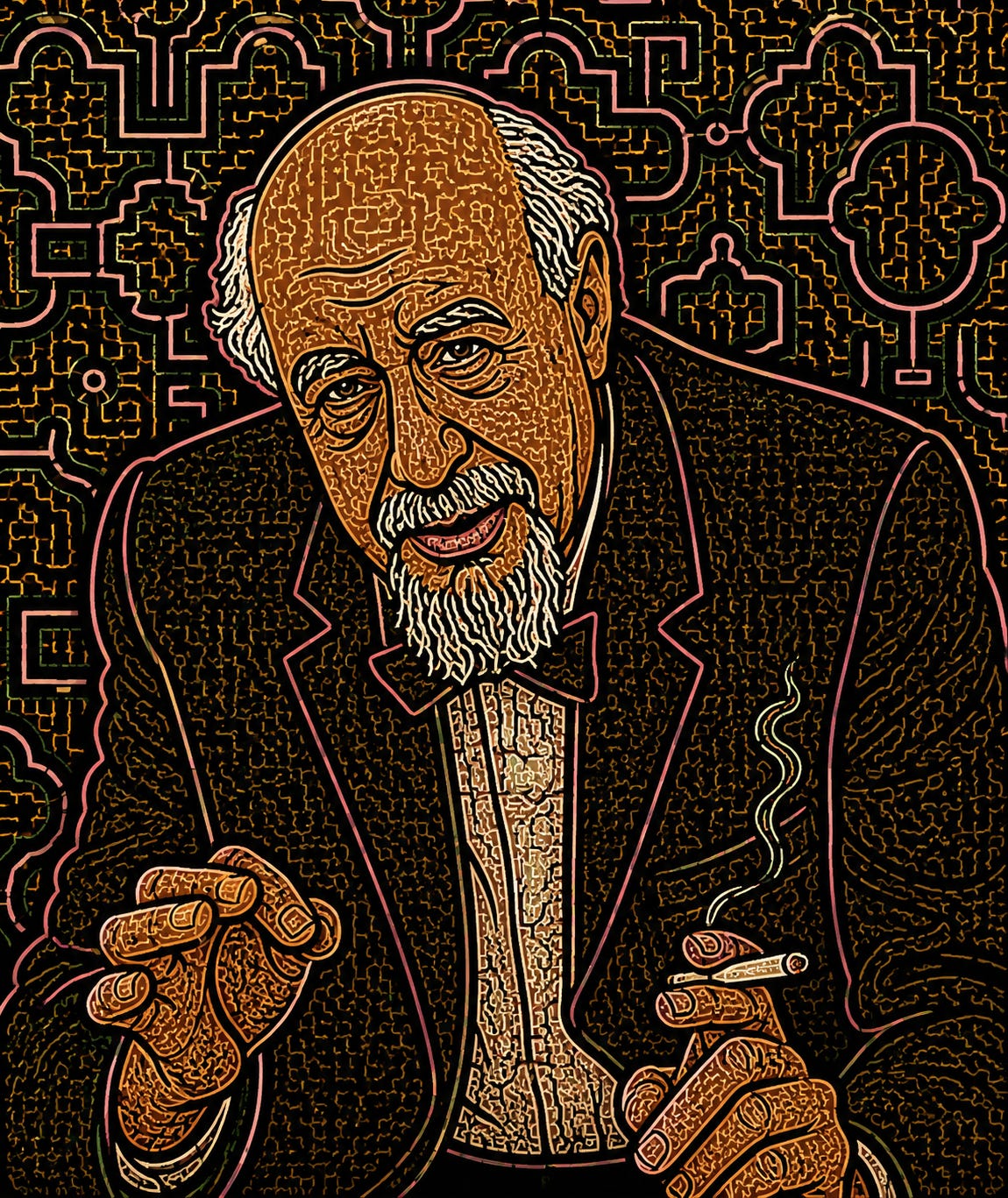
Gestalt therapy is a talk therapy treatment popularised around the world since its inception in the 50s. Part of what’s known as third force psychology - the branch of psychology known as ‘humanism’ - Gestalt developed as part of the counter reaction to the mechanistic view of humanity as developed by behavioural conditioning, and the reductionist perspective of psychoanalysis.
Humanistic psychology was mainly about honouring what makes us deeply human: our potential.
Instead of asking what was broken about people and how to fix it; humanism asked - what could be possible for the human being if he was given everything he needed?
Carl Rogers, the founder of Person-Centered Therapy, was the pioneer in that approach. He believed that unconditional positive regard, compassionate listening and holding space was enough for a person to fall apart and put himself back together again.
Fritz Perls, the founder of Gestalt, was influenced by a number of people throughout his life. He studied as a psychoanalyst and psychiatrist, travelling extensively by serving in the army in South Africa, spending time in Japan in a Zen monastery where he was inspired by the idea of ‘satori’, the human potential movement at the Esalen Institute in California, as well as living in New York and embracing the hippie counter-culture movement, often using LSD recreationally well into his 70s.
It is no surprise then, that a lot of the theoretical concepts practised in Gestalt today actually come from Eastern roots, as well as different spiritual practices -making the roots of Gestalt Therapy probably more ancient than you realise.
Here are a few of them :)
1. The Paradoxical Theory of Change (Wu Wei)
Change happens when you become who you are, not when you try to become who you are not. This is the concept of Wu Wei, or effortless action.
Borrowed from Taoism, the idea of wu-wei is to stop fighting against what is. The therapist and client stop trying to fix anything.
They surrender to what is in the present moment. By fully accepting the present reality, resistance naturally dissolves - creating room for change.
The Jungian idea of ‘what you resist’ persists. to move forward, you must stop swimming upstream.
Dissolving resistance means that change isn’t made through the brutal force of the ego, but through a process that feels very much like spiritual grace or natural unfolding.
2. The Here & Now - (Zen Buddhism)
Traditional therapy often treats the present as a mere doorway to the past, analysing childhood trauma to fix current suffering. Gestalt borrows the concept of ‘compassionate presence’ from Zen, arguing that the past is an illusion and the future a fantasy.
Everything that needs to be healed - every defense, every contraction of the soul - is happening right now in your immediate sensory experience.
We can only act in the present - thus by being present we actually activate our power to take control and reframe both past and future.
By forcing awareness into the present, Gestalt acts as a form of relational meditation. It silences the analytical ego and awakens the individual to the vivid, vibrating reality of existence.
3. The Fertile Void (Shunya, or the Sacred Nothingness)
In Western culture, emptiness is feared; it is something to be filled with noise, productivity, or consumption.
In Gestalt, however, the fertile void is the ultimate space of potential. It is heavily borrowed from the Zen concept of Shunya (emptiness) and the Taoist Wu Chi (the unmanifested source of all things).
In Gestalt, we call this the Void. It can arise in that uncomfortable, anxious moment when an old way of being has died, but a new way hasn’t yet been born.
It can feel like confusion, stuckness, or blankness,- a barren void.
But when it happens in comfortable moments of silence and stillness, both with yourself and with your therapist - those moments of quiet integration after insight, gentle pauses of silence and deep presence.
The fertile void is in fact, the womb of creativity. It can feel like the air itself is pregnant with potential.
Gestalt teaches that if you resist the urge to frantically fill the emptiness and instead stay in it, the void shifts from “barren” to “fertile.”
Out of the silence, a genuine, organic next step always arises. It requires total surrender and faith in the natural rhythm of life.
4. The ‘I-Thou’ Relationship
More easily understood as the ‘I’- ‘You’ relationship, this term was coined by Jewish philosopher Martin Buber, who said we experience all things in the form of relationship.
According to Buber - there are only two forms of relating to self, others, and the world. the first being ‘I-It’ basically a subject-object relationship - think of Freud analysing his patients as though they were specimens under a microscope, taking a detached and ‘objective’ perspective.
From the ‘I-You’ - which is a subject-subject relationship, the therapist brings themselves and their own vulnerability into the therapeutic encounter. They are part of the client’s field, part of the diagnosis - not separate.
It is a deeply human form of connection, quite different from looking at a person through a diagnostic or scientific lens, through which the person is viewed as a broken object. This is also called ‘the dialogic relationship’.
5. Polarities (Taoism)
Human beings aren’t seen from this perspective as having black and white traits - for example, either ‘good’ or ‘bad’, but rather - traits are present along a spectrum, and when one person displays one trait, it means that they also contain its opposite, usually hidden within the shadow realms of their psyche.
Someone who is extremely creative has the equal and opposite capacity to be destructive. Someone who is exceedingly kind to also the capacity to be cruel. It’s just that often these traits are disowned and hidden in the unconscious where they may cause havoc.
A person who never allows themselves to be angry may end up binge eating (which can be seen as a symbolic destruction because you destroyy food with your teeth) instead of putting boundaries or shouting.
A person who was never allowed to be an artist may turn to alcoholism instead - repressing his creative tendencies that turn destructive when not put to good use. The concept of polarities also comes from Taoism, where the yin yang symbolises that all things exist as a dynamic balance of opposing, yet complementary forces.
Thus - spiritual wholeness is not about being “perfect” or purely good; it is about integration. My favourite quote that I feel really captures this:
“I am no drunkard, but I am no saint either. A medicine man shouldn’t be a saint. He should experience and feel all the ups and downs, the despair and the joy, the magic and the reality, the courage and fear of his people.
He should be able to sink as low as a bug or soar like an eagle. You have to be God and the devil, both of them.
Being a good medicine man means being right in the midst of the turmoil, not shielding yourself from it. It means experiencing life in all its phases. It means not being afraid of cutting up and playing the fool now and then. That’s sacred too.”
— John (Fire) Lame Deer (Sioux Medicine Man of the Lakota Tribe)
6. The Concept of a ‘Gestalt’ (the Kene of the Shipibo-Conibo)
The word ‘gestalt’ comes from German, meaning ‘shape’ or ‘pattern’. The idea behind ‘gestalt’ therapy is that the whole is greater than the sum of its parts (an idea that actually was first noted by Aristotle).
The example I like to use is that: I can have four tyres, a car engine, a windshield, seats - I can have all the parts of a car, but if they’re just lying in a heap on the floor, well they’re not going to get me from A to B.
This is what we refer to as an ‘unfinished or disorganised gestalt’.
When a person cuts off their anger, for example, that anger doesn’t simply disappear, it will be repressed and the energy of that emotion will do something else, like cause digestive issues for example, or insomnia, or overthinking.
When a person can make space for their anger, allow it to integrate into the conscious self, and can channel it in a healthy way - that’s like getting all your car parts and putting them together into the ‘gestalt’ of a car.
Because all the ‘parts are in their place’ - they can function as a whole, organised unit - which is a completely different experience - a car functioning as a whole or as a complete gestalt - can take you from A to B.
All emotions, all your parts - have a right to exist within the system of your Self. But when we twist and warp those parts, or push them away - we literally cut off parts of that Self, thus being unable to act as a whole.
The ‘gestalt’ isn’t a defense mechanism in the way described by Freud - its a relational pattern that not only shapes a person’s psyche - but extends outwards into their life space (what we call a person’s ‘field’).
If a person is confused and has disorganised thinking, it is unlikely that their house will be organised and uncluttered.
If a person used to pushing others away or avoiding them, it is unlikely that they will have friends over every Thursday for dinner.
Thus this pattern isn’t just how a person’s psyche is organised - it will affect all aspects of their life and reality.
Although not originally a part of Gestalt theory - as a Gestalt therapist who spent ample time in the Amazon with the Shipibo - I couldn’t help but notice a similar concept in Shipibo cosmology.
The Shipibo-Conibo believe that Ronin, a giant mythical anaconda, brought the universe into conception, and that his skin contains all the patterns in existence - the design of a leaf, the spots of a jaguar, the constellations drawn in the sky by the stars.
They believe that all of life is made from these divine patterns, called kené.
A Shipibo curandero (healer), whilst drinking the psychoactive brew known as ayahuasca, is capable of seeing the patterns that make up a person.
They say that a person who is sick or unhealthy has ‘disorganised patterns’, and they sing special songs known as icaros over that person, that is said to re-arrange and organise a person’s patterns to bring them into healing and harmony.
Although as far as I know, Fritz Perls never visited the Amazon or drank ayahuasca, the Shipibo concept of the kené seems to overlap not only with the concept of gestalt - but with concepts of sacred geometry, such as the Golden Ratio - a mathematical ratio that when visually expressed, is seen in all of nature such as the formation of a wave, a snail’s shell, the blooming of a flower’s petals.
Ultimately, both Gestalt therapy and Shipibo shamanism express a similar perspective on human suffering and healing: that sickness is a state of disarray - a broken melody, a fractured shape.
Healing is not about adding something new to yourself or cutting out a “bad” part. It is the art of restoration.
Whether you are using the relational awareness of a Gestalt therapist - or the acoustic geometry of a Shipibo healer, the goal is to untangle the knots, pick up the peices and put Humpty Dumpty back together again - allowing the original, magnificent wholeness of your being to shine through.
If you’re looking for a therapist, or someone to help you with psychedelic integration - or you simply just resonate with my writing, please feel free to reach out to be directly by sending a message below.
I’m always happy to meet new people :)
Thank you for reading!
I’ve been seeing a Gestalt therapist for a decade and it has made all the difference. ❤️